What Paper is Used in Calligraphy, What are its Features?
Calligraphy is a branch of art that stands out in Islamic culture and aims to express writing in an artistic way. Calligraphy is used especially in writing the Quran and religious texts in an aesthetic way. Calligraphy is the aesthetic and stylized writing of the Arabic alphabet and emphasizes the readability and beauty of the texts. Calligraphy requires precision, order and attention in writing a text. The artist ensures that each letter of the text is placed in a proportionate, regular and aesthetic way. The papers used in calligraphy, namely calligraphy paper, are specially selected materials with features. In this article we have prepared for you, you can find all the information you need on topics such as calligraphy paper, calligraphy paper, sized paper, matte coated paper, calligraphy paper, places that sell calligraphy paper, calligraphy paper prices.
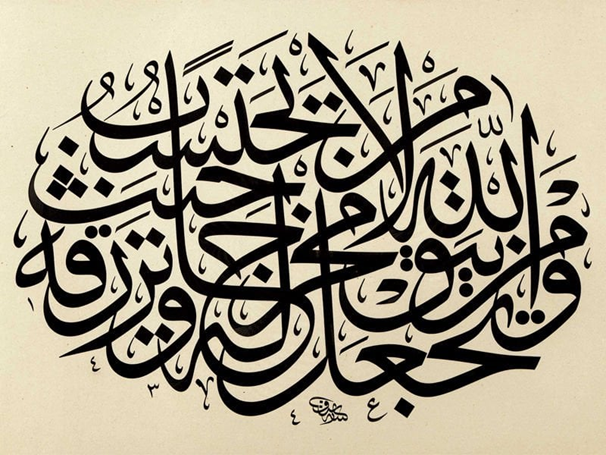
What is Calligraphy? Calligraphy is a branch of the art of writing that has an important place in Islamic culture. This art has shown great development especially during the Ottoman Empire and is still performed today. The writing styles used in calligraphy were developed by various calligraphy masters and there are examples of writings written in different styles. These writing styles include various styles such as Sülüs, Nesih, Talik, Rik’a, Diwani, Tevki and Meshk.
Today, calligraphy is still practiced in many countries and taught by calligraphers. Calligraphy is a developing art form that combines contemporary approaches with traditional techniques. The fact that calligraphy is an original and aesthetic form of expression also attracts the attention of art lovers and art collectors.
What are the Calligraphy Papers and Their Features? The special papers used in calligraphy are materials specially selected for the writings to be written aesthetically and properly. Calligraphy papers are special papers produced especially with handmade and traditional production techniques. Here are some of the papers used in calligraphy and their features: Paper Type: The papers used in calligraphy are generally handmade and specially produced papers. The most common type of these papers is the paper known as “kagit-i İbrani” or “kagit-i Mısrî”. These papers are usually made of cotton or linen fibers. Textured Surface: Papers used in calligraphy usually have a textured surface. This textured surface allows the pen and ink to stick to the paper more easily and provides a more precise and fluid movement in calligraphy. Thin and Durable: Papers used in calligraphy are generally thin and durable. Having a thin structure makes it possible to do more precise and detailed work in calligraphy. High Absorbent Feature: Papers used in calligraphy have high absorbent properties that allow the ink to penetrate the paper quickly. This prevents the ink from spreading and spreading, allowing sharper and clearer lines to be created in calligraphy. Yellowing Resistance: Papers used in calligraphy should have yellowing resistance for long-term preservation. This prevents the works from fading and losing color over time. The properties of the papers used in calligraphy are selected to provide comfort, fluency and an aesthetic appearance in calligraphy. Each calligrapher can choose paper according to their own writing style and preferences.
Blog posts are for informational purposes only. Matchless Piece only provides ultra luxury service. There is only 1 piece of art in the world.
September 29, 2024
First of all, believe in yourself
If you do not have faith and patience, not only for drawing but for any work, you cannot achieve success. For this reason, it is important to believe that you can draw first. Everyone can be successful in drawing, and for this, you can achieve results with a little determination and a lot of practice.
Know Your Pencil Before you start drawing, you need to know your pencil, which is the most important tool for you, well and choose the most suitable one. It is very important to use the right pencil for sketching. The hardness of the graphite is written on the side of the pencil. B graphite is soft, H graphite is harder, and HB provides a medium hardness drawing. You can use group B pencils to create soft textures and group H pencils for sketching.
Start with Charcoal Pencil The most correct step for those who are new to drawing is pencil studies. You do not need to use very expensive materials in these studies, which are also called charcoal pencils. A solid pencil with a black tip and white paper are sufficient for this job. Line and shading studies to be done with a black pencil will improve your hand. Since the pencil grip will vary depending on the object to be drawn, these exercises will get your fingers used to each position. Pencil is the most basic drawing material. You can easily do the light, shadow and composition techniques that beginners in drawing should definitely work on with charcoal pencil.
How to Hold a Drawing Pencil? One of the most important issues while drawing is how to hold your pencil. If you bring your hand closer to the end of the pencil, you will have more control and sensitivity. Holding the pencil from a higher angle will make you lose control a little, but it will allow you to get a softer, lighter and lighter colored drawing.
Draw Objects One of the common mistakes made by those who want to draw is to start with detailed drawings such as portraits and anatomy right away. However, it is ideal to start painting with simpler object drawings first. You can imitate the drawings in books in object drawing. An effective method is to try to do the same by looking at the drawn object.
Observe Examine everything around you. What is where on which object; where does the shadow fall according to the angle of the light; What kind of texture do materials such as glass, wood, metal, fabric have? Pay attention to all these details and try to record the details in your memory. When you want to draw a picture from your mind, it is important to know all the details of the objects.
Examine the Works of Painters It is very important to be able to memorize all the lines of the objects you see around you in order to paint. When you also learn to use the right techniques, you will have come a long way. For this, it will be useful to examine the works of successful and famous painters. You can examine the works of artists who have mastered different techniques in your free time. These examinations, which you can easily do even over the internet, will both satisfy your eyes and inspire you.
Be Patient and Work Disciplined In order to progress in the art of painting and produce impressive works, you must first be patient and gain work discipline. The pictures you draw when you first start painting will not be perfect. If you do not know how to be patient, the fact that your pictures are not perfect will discourage you and make you give up. Sometimes you may need to redraw an object many times to draw it correctly. For this reason, being patient is extremely important. You should try to make new drawings and make up for your mistakes without giving up and getting tired. In addition to being patient, you should also have a disciplined working principle. Doing your work regularly is very important for your self-improvement.
Blog posts are for informational purposes only. Matchless Piece only provides ultra luxury service. There is only 1 piece of art in the world.
September 29, 2024
Differences Between Sable and Synthetic Brushes
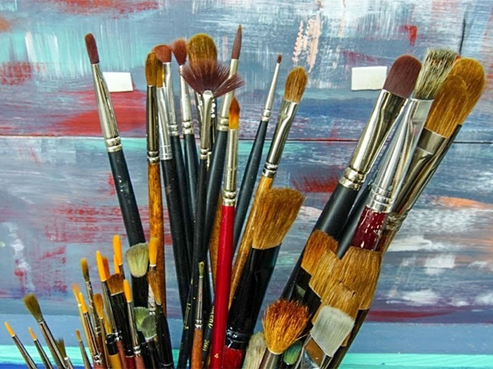
Brushes are indispensable for painting, which ranks first among popular art branches. Watercolor brush sets, specially designed for those who use watercolor while painting, offer countless options for both professionals and students. Watercolor brushes, which can be used from preschool onwards, make it possible to paint comfortably on surfaces such as drawing paper and canvas. There are many brushes with different features in brush sets, such as sable brushes and synthetic brushes. While thin brush tips are used to emphasize details, you can easily paint surfaces with thick tips. In addition to the thinness of the brushes, features such as bristle type and density also significantly affect the texture obtained. In this context, sable hair brushes, which have a very high water retention capacity, stand out. However, there are also places where synthetic brushes are preferred. Let’s take a look at our article where you can find answers to many questions such as sable brush price, synthetic brush price, where is sable brush used and where is synthetic brush used.
Special Brush Models for Different Needs The structure of painting brushes varies according to the type of paint to be used, so when purchasing a brush, you should choose models that are suitable for the technique you will use. Brushes of different thicknesses and shapes are needed when painting. The thin, thick, flat, round or flat brush options in brush sets are qualified to meet all kinds of needs. Brushes are available in models such as side cut, flat cut, fan, round, flat, cat tongue, depending on the cut shapes of their bristles. Brushes with different cuts also have alternatives in different thicknesses. Thin brushes, also known as toning brushes, are ideal for detail drawings and soft transitions. Ground brushes, on the other hand, are perfect for obtaining aesthetic textures with their thick tips and wavy structures. Having more than one frequently used detail and surface brush in the purchased set also provides the opportunity to use different colors at the same time. This ensures that the colors do not mix and the desired tone is achieved. What are the Brush Types According to Bristle Structure? Watercolor brushes consist of a handle and high parts in addition to the bristle section. Although the handle and ferrule are important for proper grip, the quality of the brush is mostly determined by the bristle structure. High-quality brushes made of sable hair produce more functional and aesthetic results. In addition to natural sable hair, which has a soft structure, there are also synthetic products that resemble this hair. Especially in small-tipped detail brushes, the natural and soft structure of sable hair provides extremely effective and efficient use.
You can buy brushes with synthetic bristles at much more affordable prices, however, it is more difficult to achieve results as natural as sable hair. The natural hairs of animals such as sable, squirrel, and horse hold much more paint and transfer it to the paper thanks to their surface structures with micro indentations and protrusions. The disadvantage of natural bristles is that they wear out more quickly and do not last as long as synthetic products. Detail brushes are generally preferred with natural bristles, while surface brushes are preferred with synthetic bristles. What are the Uses of Different Types of Brushes? Art brushes have many different types of bristle properties. Bristles are generally determined according to their suitability for the chemical structure of the paint. For example, oil paint requires flexible but durable bristles. Therefore, oil paint brush bristles should be more solid and thick. Since acrylic paint is not as hard as oil paint, slightly thinner bristles can be used in this technique. Watercolor paint, on the other hand, requires very soft bristles that can hold a lot of water because it is a more delicate paint.
Brushes made of animal hair are more expensive than synthetics, but their paint retention capacity and ease of application are at a high level. For example, sable hair brushes have indispensable features for watercolor works. However, synthetic brushes have also made significant progress since they were first produced and have reached a quality level that is no less than brushes made of natural bristles. In addition, it is easier for the brush tip to return to its former smooth state after applications made by pressing on the painting surface in synthetic brushes than in brushes made of natural bristles. Professional painters generally use both natural and synthetic bristles together.
What are the Features of Sable Brushes? The most important feature of sable brushes is that the water retention capacity of sable hairs is much higher than synthetics. As such, brushes made of sable hair hold more paint. The most popular sable brushes are those made from the hair of the “Kolonsky sable”. Among natural bristle brushes, sable brushes are the most preferred today. Compared to others, these brushes are quite soft and due to these features, they do not leave brush marks during color transitions. They do not. Sable brushes are the most ideal brushes for creating textureless surfaces and softening color transitions. Since they do not leave a mark, they produce extremely successful results especially in sky drawings and effects.
On the other hand, sable brushes are a bit expensive due to both their features and their high demand. For this reason, the most imitated brushes on the market are again sable brushes. In fact, it is quite difficult to distinguish a well-imitated sable brush from the original. Original sable brushes need to be collected at the tip and become as thin as a pin when they come into contact with water or paint. For this reason, sable brushes are the most suitable painting brushes for very fine drawings. In addition, the colors of imitation sable brushes are lighter and orange, while the originals are more matte.
What are the Features of Synthetic Brushes? Synthetic brushes are brushes with bristles made of nylon and/or polyester instead of natural bristles. They are used when applying acrylic/water-based paints. Since they are synthetic, their bristles do not absorb water. In this way, it is possible to achieve an even finish. They are easily cleaned and can be easily kept in water because they do not absorb water. The life of synthetic paint brushes is much longer than natural bristle paint brushes and synthetic paint brushes are more durable than natural bristle brushes.V
Blog posts are for informational purposes only. Matchless Piece only provides ultra luxury service. There is only 1 piece of art in the world.
September 29, 2024
What is Watercolor Paper and How Should It Be?
We can answer the question of what is watercolor paper as a special type of paper used when working with watercolor technique. Watercolor paper should provide the best absorption and spread of paint pigments. These features help colors maintain their vibrancy and texture. Watercolor papers should have a smooth surface and a certain weight. Having a textured surface allows paint pigments to adhere better to the paper. Watercolor paper varieties are available with different brands and features. These can be in different sizes, surface types and thicknesses. Smooth-surfaced papers are suitable for sharper lines and detailed work, while textured-surfaced papers are preferred to create a freer and more atmospheric appearance. The price of watercolor paper varies depending on the quality, brand and size of the paper. When working with watercolor technique, it is important to choose the right paper. For this reason, it is important to find an answer to the question of what a good watercolor paper should be. What is Watercolor Paper? Watercolor is a painting technique in which water-based paint pigments are diluted with water and applied. Watercolor paper is a special type of paper used in paintings made with this technique. The papers used in this technique must have certain features such as absorbing paint pigments, spreading and preserving the vividness of the colors. Watercolor paper can also have a smooth or textured structure. Papers with smooth surfaces are preferred for more detailed works, while papers with textured surfaces are preferred for a freer look. Watercolor paper is important in terms of controlling the spread and mixing of colors during the application of paint. Choosing the right watercolor paper is important in achieving the desired results and preserving the vividness and aesthetic value of the paintings. How Should Watercolor Paper Be? Watercolor paper must have certain features in terms of getting the desired efficiency from the paints. To briefly mention these features: Absorbency: A good watercolor paper should be able to quickly absorb water and paint pigments and ensure that they spread on the paper surface. Surface texture: The surface of the watercolor paper can be smooth or textured. The choice of paper surface may vary depending on the artist’s preference and the purpose of the work. Durability: Watercolor paper should be resistant to wetting and paint applications. The paper should support the spread of paints and should not tear or spread.
Size and thickness: The size and thickness of the watercolor paper should be selected depending on the size of the work and the desired effect.
Acidity: A good watercolor paper should have a structure that is non-acidic or does not contain acidic components. The properties of watercolor paper may vary depending on the artist’s personal preferences and the purpose of the work. Watercolor Paper Types There are different brands and specifications of watercolor paper. Some of the commonly used watercolor paper types are: Hot-pressed Paper: This type of paper has a smooth surface. It allows the colors to spread more sharply and in more detail. Cold-pressed Paper: Cold-pressed papers have a slightly textured surface. It allows the paints to spread more freely and creates a more atmospheric effect. Rough Surface Paper: Papers with a rough surface have a distinct texture and a rough surface. It allows the paints to spread freely and use the natural texture of the paper. Weight Paper: Weight paper has a heavier and thicker structure. These papers can be preferred for intense colors and depth effects.
Multi-Purpose Paper: Multi-purpose papers are general purpose papers suitable for different watercolor techniques and other wet media uses.
Block Paper: Block papers are a paper format that contains pages combined into a block. Block papers provide convenience by eliminating the need to stretch or glue your images individually. Once each page is completed, you can remove the page by cutting the adhesive part on the block.
Blog posts are for informational purposes only. Matchless Piece only provides ultra luxury service. There is only 1 piece of art in the world.
September 29, 2024
What is Illumination Art, What are the Necessary Materials for Beginners in Illumination Art?
What is Illumination Art? The word meaning of tezhip is decoration with gold, and it is a term that entered our language from Persian. Especially used effectively in the decoration of the Quran, tezhip is also encountered in documents such as decrees. Again, tezhips processed around different plates and documents are works with quite aesthetic values. Illumination art, which can be made in different colors, experienced its brightest period in the Ottoman Empire, especially during the reign of Suleiman the Magnificent. The most favorite color in Turkish illumination art is dark blue tones. Today, interest in illumination art has increased again.
How is Illumination Art Made? Illumination works have spiritual values as well as visual values. This situation increases the interest in illumination art. Gold is used together with paint while performing illumination art. The gold is beaten to form a special thin layer. Such layers are called folio. The gold leaf is then thoroughly crushed in water and mixed with gelatin. In this way, the mixture reaches a certain consistency. The paints used in illumination paintings are generally earth paints. Today, earth paints have been replaced by synthetic paints. Those who perform illumination art are called gilders. Illuminationists are artists with high manual skills.
What Materials Are Used in Illumination Art? There are a number of materials used while performing illumination art. Among these materials; various sizes, pencils, gouache paints, Arabic glue, china ink, and utility knife can be counted. Since illumination collectors prefer illumination works made of quality materials, it is important that the materials used in illumination art are of high quality. For more information. (Calligraphy and Illumination Materials) The materials needed for illumination are briefly as follows;
Thinned gold, which is the main material of illumination.
Stamp
Brush
Paint
A fine-tipped pen.
Alum
Pallet
Utility knife
Ruler and set square equipment
Good lighting Of course, these materials may vary depending on the style and mastery of the illuminator. The illuminator, who obtains all the materials needed for illumination, first starts by thinning the gold if it has not been thinned. The gold is obtained by beating it between parchment and cow intestine. Then, the illuminator pierces the motif he has prepared on the paper with a fine-tipped needle before starting the technical application, but it is important that this piercing process is done on a hard surface in order not to damage the motif. After this process, the illuminator must place the motif in the area where he will decorate and fill the points he pierced with the needle with adhesive material. After this step, the motif is removed and filled with gold or paint. As a result of all these processes, illumination and decoration are achieved. Although it may seem like a few simple steps, illumination is an art that requires mastery, creativity and knowledge.
Illumination Sections Illuminations are given different names according to the way they are made and the places where they are made. The decoration called Hâlkârî is made only with gold and on the page edges. The decoration called Zerefşan is usually made by sprinkling gold dust on the page edges and sometimes on the entire page. The most common sections of illumination art are as follows: -Hatime illumination -Page edge illumination -Blank page illumination -Intermediate space and seat illumination -Bordür, Ulema, Zencirek, Kenarsuyu -Rose illumination -Surah beginning illumination -Vakfiye illumination -Serlevha illumination -Fihrist illumination -Zahriye illumination
Blog posts are for informational purposes only. Matchless Piece only provides ultra luxury service. There is only 1 piece of art in the world.
September 29, 2024
What is a Calligraphy Pen, What are the Prices of Calligraphy Pens?
Calligraphy is a word of Greek origin. It is a word that comes from the combination of the words “Kallos”, meaning beautiful, and “graphia”, meaning writing, meaning beautiful writing. Almost every country has its own type of writing. This art of writing reflects the culture of that country. In this respect, calligraphy is a kind of cultural ambassador. The Art of Calligraphy, which reached its peak in our country during the Ottoman period, is actually Arabic calligraphy. People who practice the art of calligraphy, which is also met with great interest and curiosity today, are called calligraphers. Since calligraphy is a type of writing art, the most important elements of this art are naturally writing tools. Calligraphy pens, in particular, have an important place in this art. There are three types of calligraphy pens used today: Dipped metal-tipped calligraphy pens, filled metal-tipped calligraphy pens, and felt-tip calligraphy pens. In this article, we will tell you; We will try to answer questions such as what is a calligraphy pen, how much do calligraphy pens cost, which is the best calligraphy pen. Now let’s examine these pen types in detail.
What are the Features of Calligraphy Pens? Those interested in the art of calligraphy need many materials of different sizes and shapes. Unlike traditional writing tools, some calligraphy pens used today allow even the most complex shapes to be successfully transferred to the surface. Even if you have no training in this regard, you can do very beautiful works using calligraphy pens. You can find many calligraphy pens suitable for different writing styles and surfaces on the market. Each of these pens has its own advantages and disadvantages. The better you know these pens and their advantages and disadvantages, the better you will understand that calligraphy requires not only talent but also the appropriate tools. Although it is possible to do calligraphy even with a pencil, it is important to use the right tools to get the best results in calligraphy.
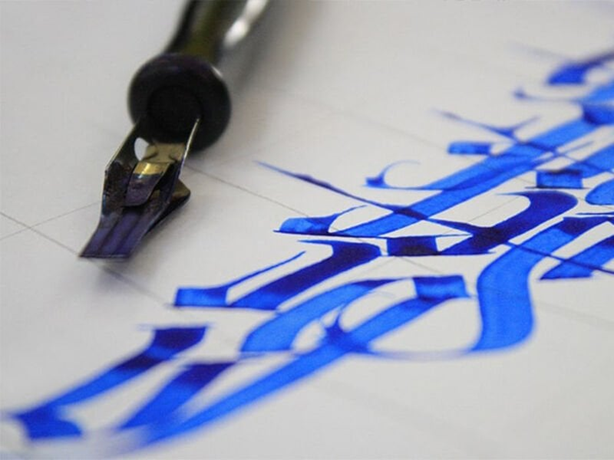
Dip Metal Tip Calligraphy Pens Dip metal tip calligraphy pens are the most difficult to use among calligraphy pens. These pens, which consist of 2 parts: dip and metal tip, are used by dipping into ink. The biggest advantage of these pens is that metal tips of different thicknesses can be attached to the dip part and allow for different writing and decoration styles. In addition, since the dip part becomes thinner from the body to the handle, it fits perfectly in the hand. In this way, it offers the user ease of movement both in writing and decoration. In calligraphy, dip metal tip pens are mostly used in the decoration stage. However, in addition to attention and dexterity, coordination ability is also required to use these pens. The drying time of the ink is longer in these pens. Therefore, the user does not have much chance of writing quickly or decorating quickly.
Refill Metal Tip Calligraphy Pens The most preferred calligraphy pens are refill metal tip calligraphy pens. Since these pens have an ink reservoir instead of a dip, there is no need to dip the metal tip into the ink. The body of the pens is in the shape of a normal pen body, unlike a dip. Although not as much as a dip, these pens also have a good grip. In addition, since the ink used in these pens dries faster, it increases the user’s writing and decorating speed.
Felt-Tip Calligraphy Pens One of the most commonly used pens among calligraphy pens is felt-tip pens. These pens, which have their own reservoir, also offer the user the opportunity to write and decorate quickly. Since some types of felt-tip pens are refillable, these pens are also more economical. The most important advantage of felt-tip pens is that they make drawing continuous and straight lines much easier than others. Even the best calligraphy pen types cannot produce as successful results as felt-tip pens in drawing continuous and straight lines.
What are the Calligraphy Pen Brands? Those who have an idea about calligraphy pens start to pay attention to the brands during the purchasing phase. The pens of each brand have different features. The brand that stands out in this sense is Artline. This pen, which is famous for its water resistance, is often used in calligraphy writing. Another brand that is as popular as Artline is Edding. Marvy brand should also be counted among the good calligraphy pen brands.
What are the Calligraphy Pen Colors? Matte black color is mostly preferred in calligraphy art. Thanks to the black color, the aesthetic writing style becomes more apparent. Recently, a few different alternative colors have emerged. For example, gold colored inks also have an important effect in terms of aesthetics. Silver color is another preferred color.
How Much Are Calligraphy Pen Prices? The prices of calligraphy pens vary according to the brands. In addition, pen tips bees and colors are also effective in pricing. In short, it is necessary to evaluate the prices of calligraphy pens by looking at their features.
Special Inks for Calligraphy Pens You should obtain water-based pigment inks. An ink suitable for the structure of the pen should be selected. There are color alternatives as black, gold and silver. Alternatively, you can also obtain inks in more vibrant colors such as blue.
Blog posts are for informational purposes only. Matchless Piece only provides ultra luxury service. There is only 1 piece of art in the world.
September 29, 2024
What is Passepartout, What is it Used for?
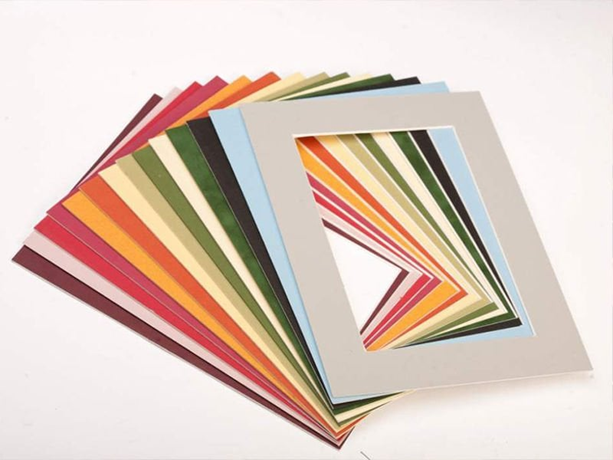
What is Passepartout? Passepartout is a framing method where a small-sized image is placed in the space opened in the middle of a large-sized material; to create a sense of depth in the picture, to emphasize and beautify the picture. In other words, passepartout is the front frame between the frame and the original work. Passepartout sits between the frame and the image to give the image a complete look. During the picture framing process, the passepartout also serves as an additional protection separating the work from the glass. Normal matte board is produced from wood pulp that is buffered during production. The core and back of the card are acid-free, but the surface is not paper.
Where and How is Passepartout Used? Passepartout has two purposes: First, to prevent the image from touching the glass, and second, to frame the image and increase the attractiveness of the image. The cut in the passepartout is usually opened at an angle to prevent shadows from falling on the picture.
Making Passepartout Making passepartout is the easiest way to protect watercolor paintings and ensure their longevity. If cardboard is to be used as a base, it is important to cut it according to the size of the picture. Because cardboards that protrude from the edges do not create a pleasant appearance. Whether it is white or colored cardboard, it can be cut so that it can be seen as a frame a few centimeters wide on all four sides of the picture. In this way, it increases the effect and emphasis of the picture. It is also possible to use the cardboard as a frame by opening the middle. The hole in the middle of this frame, which we call passe-partout, is generally half or one centimeter smaller than the picture.
It is also possible to glass watercolor paintings that will be hung or exhibited on the wall. For this, a clean glass the size of the picture and a cardboard of the same size are cut. The picture is placed between the cardboard and the glass and the edges are wrapped with a glued strip and glued.
Is It Easy to Make a Passe-partout? Making a passe-partout is an easy method, although it varies depending on the materials you have. You can do it by just watching videos that show how to make a passe-partout.
What are the Materials for Making a Passe-partout? The materials to be used to make a passe-partout are cardboard for the background, a picture, a ruler, glue, scissors and a pencil. It is quite easy to make a passepartout at home, but if you want more professional solutions, you can look at our passepartout frame models on the Vera Sanat website.
How to Make a Passepartout? If you are wondering how to make a passepartout, let’s take a look at easy passepartout making together. First, the distance between the cardboard and the image is adjusted. We can say that approximately 5 cm from the edges is ideal. If we are going to stick a label on the bottom or write your name, you can keep the area here wider. After adjusting it to be 5 cm from the edges, points are determined for all edges with the help of a ruler. Then, the image is placed on the background and glue is applied to the corners to keep it fixed. After the image is pasted, you can cut the excess on the cardboard with scissors. Then you can glue the other corners between the image and the background. You can prefer non-liquid adhesives so that it does not leave stains when applying the adhesive.
What is a Frame Passepartout? Frame passepartout is one of the framing methods used to make the image more emphasized and more distinct by creating a gap after the image. If you want to get professional support for your visual works, you can visit Vera Sanat website and get the highest quality and most professional frames at affordable prices.
What Does Passepartout Cardboard Mean? Passepartout cardboard is a heavy, paper-based cardboard material that is pre-arranged and used in picture framing.
Blog posts are for informational purposes only. Matchless Piece only provides ultra luxury service. There is only 1 piece of art in the world.
September 29, 2024
What is Paper Sizing?
Materials and Methods Used in Sizing and Sealing Paper
AHAR The most commonly used process to smooth the surface of the paper was “sharpening”. Sizing was done to smooth the surface of the paper and make it suitable for writing, to allow the pen to easily move on the paper and to prevent the ink from penetrating the texture of the paper. Any mistake made on the papers made suitable for writing with this process could be easily erased. At the same time, it can be said that this process was done as a precaution against the deterioration of the paper, especially since iron-containing inks cannot reach the texture of the paper.
Egg Sizing
Egg whites are mixed in a bowl until they reach a thick consistency. The thickened egg whites start to foam and are left for a few hours after this stage, and the hardened foams stick to the bowl. The more liquid egg whites under this hard part are applied to the paper with the help of a cotton cloth. If this process is to be done more than once, each layer should be applied in different directions.
Starch Whitening
Wheat or corn starch is crushed in cold water, poured into boiling water and cooked. The cooked starch is filtered through fine cheesecloth and applied to the paper surface. Flour Whitening
It is prepared in the same way as starch whitening.
Shellac Whitening
Shellac dissolved in spirit is applied as in other whitenings.
The whitening process can be applied to the surface of the paper, depending on the amount of paper to be whitened, or it can be done by dipping it into the whitening. If the amount is large, dipping is generally preferred.
STAMPING It is the process of smoothing the paper surface with materials such as flat stone, glass or zer. The paper smoothed with this process is called “whitewashed paper”. In whitewashed papers, the ink penetrates the texture of the paper and becomes indelible. For this reason, it has been applied to papers to be used in official documents.
Blog posts are for informational purposes only. Matchless Piece only provides ultra luxury service. There is only 1 piece of art in the world.
September 29, 2024
Materials You Will Need in a Calligraphy Course
How to Learn Calligraphy? Calligraphy, a fine art of writing dating back centuries, is still of great interest to people today. Calligraphy, which was learned in the past by being performed with great patience within a master-apprentice relationship, can now be learned by attending public or private courses. In short, it is possible to learn calligraphy in public education courses or private courses. However, it is not enough to just attend a course to learn calligraphy. Calligraphy, a type of fine art, is a field that requires great talent, patience and spiritual beauty. The most distinctive feature of those who practice calligraphy is that they are extremely patient and have developed aesthetic feelings. People who are interested in calligraphy begin to admire this art as much as they delve deeper into the depths of calligraphy. One of the most important elements that pushes people to learn calligraphy and the subtleties of this art is the determination that this sense of admiration evokes.
What is Taught in Calligraphy Courses? The general purpose of calligraphy courses is to provide the person with the knowledge to perform this art using their own creativity and skills. In these courses, the aim is to train calligraphers who can prepare ink for calligraphy, sharpen reed pens, heat paper and write letters according to the writing styles.
At the beginning of the course, the personal characteristics, initial qualifications and learning needs of each of the trainees are determined. According to the prepared training program, visual and auditory teaching materials are carefully selected. The teaching materials to be used in the course are personally determined by the teacher giving the course.
Continuous evaluations are made throughout the course and the learning levels of the individuals are evaluated. If some deficiencies and mistakes are noticed, the necessary corrective and complementary learning activities are implemented. Everyone who successfully completes the education and teaching activities given in these courses will be able to perform the art of calligraphy at a certain level. In calligraphy courses, the following trainings are generally given:
Sharpening a reed pen and preparing an inkwell
Getting to know the writing types applied in calligraphy
Learning how letters combine with other letters
Making movements on the text
Proofreading the text
Making a murakka of the written texts
Knowing how to make movements on the lines In addition to these, the following training subjects can also be given in the courses;
Basic Art Knowledge
Knowledge of Calligraphy Culture
Knowledge of Illumination Art Culture
Knowledge of Miniature Art Culture
Knowledge of Ebru Art Culture
Being able to Read and Write Ottoman
How is Calligraphy Done? Calligraphy is done with the unique methods of each calligrapher and bears traces of the imagination of the master. Since aesthetics is an important element in calligraphy, the aesthetic understanding of calligraphers is decisive for this art. What is important is for the calligrapher to decide what to write. After deciding on the word to be written, the work emerges depending on the patience, talent and creativity of the artist. Calligraphy is, in its simplest definition, the symbolization of letters or the transformation of symbols into letters, and in this case, the path to be given to letters and symbols is hidden in the skillful hands of the calligrapher. The fact that imagination has an important place in calligraphy requires the calligrapher to put his imaginary world on paper using words. A good calligrapher reflects his imagination in his works and while doing this, he creates a work with aesthetic concerns. It is known that in the past, calligraphers received training in a master-apprentice relationship for many years in their adventures of learning this art. In other words, there is no end to the training to be received in order to become a good calligrapher, so calligraphy requires great patience.
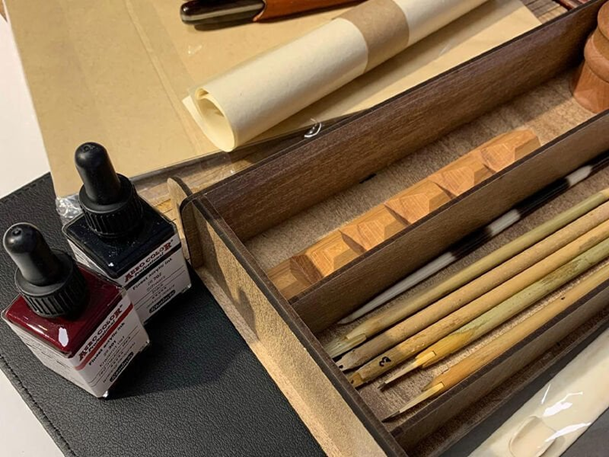
What are the Necessary Materials for Calligraphy Art? The materials used in calligraphy can be easily obtained today. We can list these materials as follows;
Calligraphy Knife
Celi pen
Reed Pen
Writing Set
Aharlı Paper
Coated Paper
Lika
Calligraphy Inks
Pencil Sharpener
Makta
Scissors
Inkwell
Blog posts are for informational purposes only. Matchless Piece only provides ultra luxury service. There is only 1 piece of art in the world.
September 29, 2024
Recommendations for Those Who Want to Start Calligraphy Lessons
One of the most beautiful examples of traditional Turkish arts, calligraphy has survived to the present day through the master-apprentice discipline. However, today, people who want to be interested in this art receive training in calligraphy courses. There are many places that offer calligraphy courses and calligraphy lessons in order to convey the understanding of calligraphy to society and to experience the aesthetic feeling created by this art. Calligraphy reflects our historical cultural richness that has reached from the past to the present. You can take calligraphy lessons and learn this art to practice calligraphy. You do not need to be highly skilled or knowledgeable to be able to practice calligraphy. You can master the art of calligraphy that you will feed with your imagination and beautiful writings after a certain period of time and become a calligrapher. If you think calligraphy is difficult, you can close your gaps by taking calligraphy lessons. We have prepared a useful article for you about calligraphy and courses. Be sure to read our article where you can also find information on specific topics such as Izmir calligraphy lessons and Izmir calligraphy lessons. What is Calligraphy? The word calligraphy, which literally means line or writing, is a traditional Turkish art that aims to create writing and shapes by adhering to certain aesthetic rules. This art, which is called calligraphy in our country, is known as “calligraphy” in Western countries. Calligraphy, which has a very old history, is widespread all over the world, but it attracts more attention in Muslim societies. Especially in our country, calligraphy, which is highly appreciated, attracts everyone’s attention. New artists are trained with calligraphy courses available in almost every province. Calligraphy courses are provided free of charge in many institutions. You can check out our article for information about calligraphy works. Calligraphy Courses Calligraphy can be done with training and courses taken from master calligraphers in the first place. Learning calligraphy, which has certain rules and shapes, is a process that requires patience and time above all else. During this process, Arabic letters and calligraphy fonts should be thoroughly recognized. In calligraphy, letters are turned into certain symbols and then applied as letters. It develops day by day depending on observation, self-improvement and imagination. Because the works that emerge in calligraphy reflect the imagination as well as the talent and skill of the calligrapher.
What are the Materials for Calligraphy? There is no need for many materials and large budgets to be able to perform calligraphy. You can take the first step for calligraphy with pen, paper, ink, stamp, inkwell, inkwell and writing pad. However, of course, we definitely recommend that you start this traditional art by getting training. You can take a look at the article we have prepared for more detailed information about calligraphy materials.
How are Calligraphy Courses Given? The main purpose of calligraphy courses is to train people who can prepare ink for calligraphy, open reeds, size paper, write letters according to writing types and stack them according to writing types. At the beginning of the courses, the personal characteristics, competencies and learning needs of the participants are determined separately and then annual plans and lesson plans are prepared for the courses. Care is taken in the selection of teaching materials, and these materials are determined by the instructor personally. The following achievements are generally included in the calligraphy art training program;
Opening a reed pen and preparing an inkwell
Getting to know the writing types applied in calligraphy
Writing letters with the Thuluth script and combining letters with other letters in order
Making movements on the text
Making corrections on the text
Making a murakka of the written text
Arranging a plate
Learning the Nesih script and its features, writing letters with the Nesih script, writing lines with the Nesih script, making page layout with the Nesih script
Making a Thuluth-Nesih plate
Who Can Take Calligraphy Courses? There are basically no prerequisites for attending calligraphy courses. However, since this is a beautiful art of writing, participants must have the skills to read and write, or at least use a pen. No other conditions are sought. People who progress in the art of calligraphy and who develop over time and produce their own calligraphy products are called “calligraphers”. After learning the art of calligraphy, calligraphy types and letters, mastering the art of calligraphy and receiving the title of calligrapher will further increase your love for calligraphy. At the end of the calligraphy courses, a calligraphy course certificate is given for successfully completing the course and participating.
Calligraphy Courses Are More Common in Metropolitan Cities Calligraphy courses are much more common in metropolitan cities. You can find many more courses and lessons in this art form in metropolitan cities such as Istanbul, Ankara and Izmir. Participation in courses given by municipalities and foundations is usually completely free It is free. If you want to benefit from these trainings, you can access calligraphy courses in your area with a short search on the internet. To learn more about calligraphy and to get information about calligraphy exhibitions and museums, take a look at our article.
Blog posts are for informational purposes only. Matchless Piece only provides ultra luxury service. There is only 1 piece of art in the world.